Is Your Dog Whining Constantly? What It Really Means
 Dawn Lowery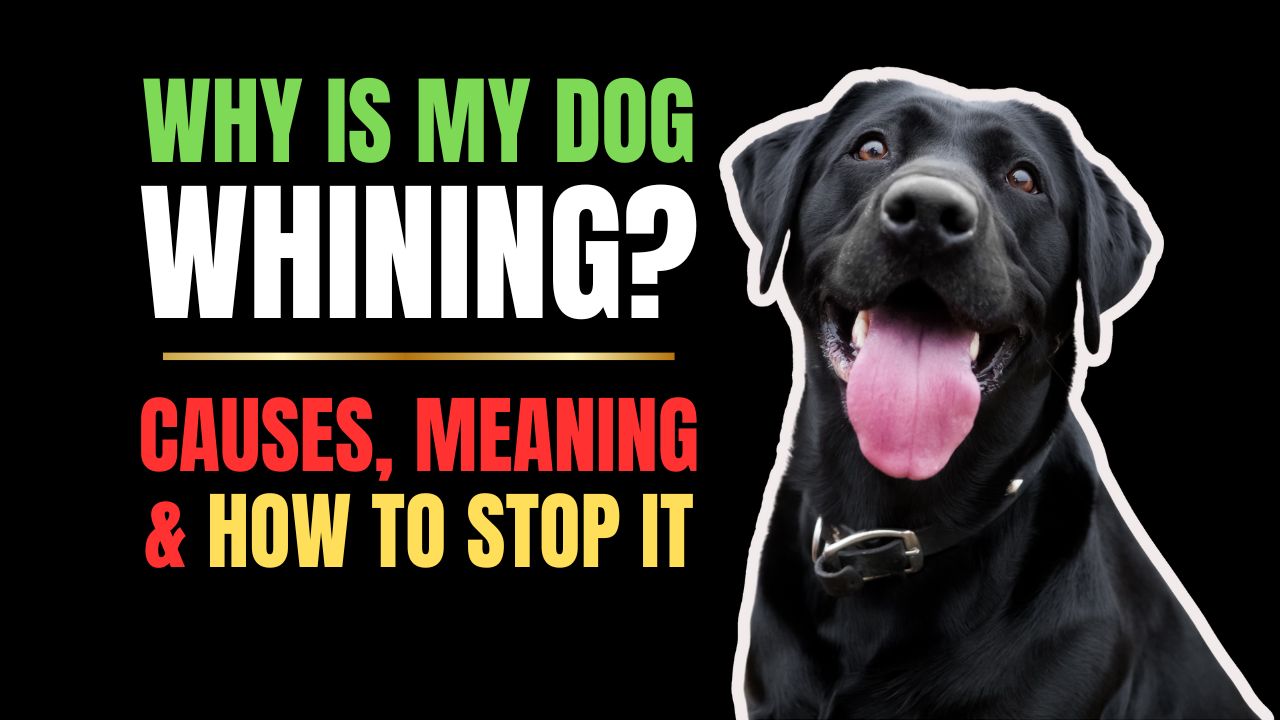
Why Is My Dog Whining? Causes, Meaning & How to Stop It
Constant whining is one of the most common yet misunderstood behaviors in canine communication. While it can be frustrating for owners, this vocalization serves as an important form of expression for dogs. Understanding the underlying causes of whining is crucial for addressing your dog's needs and strengthening your bond.
Whining represents a complex form of canine communication that can indicate everything from basic needs to emotional distress. Dogs use different types of whines to convey specific messages, with variations in pitch, duration, and intensity providing clues to their emotional state and intentions.
This comprehensive guide explores the science behind dog whining, from physiological mechanisms to emotional signaling. You'll learn to distinguish between different types of whines, understand what your dog is trying to communicate, and discover effective strategies to address both the behavior and its underlying causes.
Understanding Dog Whining
Whining is a high-pitched vocalization that dogs use to communicate various needs, emotions, and intentions. Unlike barking, which often serves as an alert or warning, whining typically conveys more subtle messages related to emotional states, social needs, or physical discomfort.
The Science of Canine Vocalization
Research into canine vocalizations reveals that whining serves multiple communicative functions that have evolved through domestication. Studies show that dogs have developed more varied vocalizations than their wolf ancestors, possibly as an adaptation to communicate with humans. Whining specifically engages human caregivers by triggering nurturing responses, similar to how human infants use crying. The pitch and frequency of whines often fall within ranges that humans find particularly compelling or concerning. Interestingly, research has demonstrated that people can often accurately identify the emotional context of dog whines, suggesting this form of communication has effectively bridged the species gap. Understanding this evolutionary background helps explain why whining is such an effective way for dogs to capture our attention and convey their needs.
Whining as Communication
Dogs use whining to express a wide range of emotions and needs. From the excited whine of anticipation to the distressed whine of anxiety, each variation conveys specific information to attentive listeners.
| Whine Type | Common Context | Likely Meaning |
|---|---|---|
| Attention Whining | When owner is occupied, during quiet times | Seeking interaction, boredom, loneliness |
| Anxiety Whining | Separation, unfamiliar environments, stress | Fear, uncertainty, distress |
| Excitement Whining | Before walks, meals, seeing familiar people | Anticipation, eagerness, high arousal |
| Pain Whining | Movement, handling, without obvious triggers | Discomfort, injury, illness |
Common Causes of Whining
Dogs whine for various reasons that span emotional, physical, and social categories. Understanding these different motivations helps you respond appropriately to your dog's needs.
Emotional Causes
Anxiety & Stress
Dogs may whine due to separation anxiety, fear of specific triggers, or general stress. This type of whining often occurs with other anxiety signals like pacing or panting.
Emotional expression
Physical Causes
Pain & Discomfort
Whining can indicate physical pain, illness, or discomfort. Dogs may whine when moving, being touched in specific areas, or due to internal discomfort.
Medical concern
Social Causes
Attention & Communication
Dogs often whine to solicit attention, express excitement, or communicate needs like wanting to go outside, play, or receive food.
Social behavior
Whining Causes by Frequency
The Pain-Whining Connection
Veterinary behaviorists emphasize that new or changed whining patterns can be significant indicators of pain or illness. Dogs in pain may whine consistently or only when moving in certain ways or being touched in specific areas. The whine associated with pain often has a different quality than attention-seeking whines - it may be more persistent, have a different pitch, or occur in contexts that don't typically trigger vocalization. Common medical conditions that cause whining include arthritis, dental issues, gastrointestinal discomfort, urinary tract infections, and more serious conditions. If whining is new, persistent, or accompanied by other signs like decreased appetite, lethargy, or behavior changes, a veterinary examination is crucial. Early detection of medical issues through attention to vocalization changes can lead to more effective treatment and better outcomes.
Context Matters: Interpreting Whines
The meaning behind your dog's whining depends heavily on the context in which it occurs. The same vocalization can communicate different messages depending on the situation, frequency, and your dog's overall behavior patterns.
Situational Interpretation
Understanding what was happening before and during your dog's whining provides crucial clues to its meaning. Different contexts trigger whining with distinct emotional underpinnings.
| Situation | Likely Meaning | Appropriate Response |
|---|---|---|
| When preparing to leave | Separation anxiety, anticipation of being alone | Calm departures, independence training |
| During mealtime preparation | Excitement, anticipation of food | Teach calm behavior before feeding |
| When seeing other dogs | Frustration, excitement, social arousal | Training for calm greetings, management |
| Without obvious triggers | Possible medical issue, generalized anxiety | Veterinary consultation, behavior assessment |
Reading the Full Behavioral Picture
Whining rarely occurs in isolation. To accurately interpret your dog's vocalizations, you need to consider the complete behavioral picture. A dog who whines while staring at the leash and wagging their tail is likely expressing excitement about a walk. A dog who whines while pacing, panting, and avoiding eye contact may be experiencing anxiety. A previously quiet dog who suddenly starts whining when moving or being touched might be in pain. Important factors to consider include: body posture, tail position, ear placement, eye expression, and overall activity level. By observing the entire constellation of behaviors rather than focusing solely on the vocalization itself, you can much more accurately determine your dog's emotional and physical state. Keeping a simple log of when whining occurs and what accompanies it can reveal patterns that help with accurate interpretation.
Context Assessment Checklist
- What immediately preceded the whining?
- What is your dog's body language communicating?
- Does the whining stop when needs are met?
- Is this a new behavior or established pattern?
- What time of day does whining typically occur?
- Are there specific triggers that consistently cause whining?
- How does your dog respond to distraction or redirection?
- Have there been recent changes in routine or environment?
Types of Whines & Their Meanings
Dogs use different whining patterns to communicate specific messages. Learning to distinguish between these variations helps you respond more effectively to your dog's needs.
The Whining Spectrum
Canine whines exist on a continuum from high-pitched, rapid vocalizations to lower, more drawn-out sounds. Each pattern typically correlates with specific emotional states or intentions.
Excitement Whine
Sound: High-pitched, rapid, rhythmic
Body Language: Wagging tail, alert posture, forward orientation
Common Triggers: Anticipation of walks, meals, play
Response: Teach calm behavior before rewarding
Anxiety Whine
Sound: Medium pitch, inconsistent, may trail off
Body Language: Pacing, panting, avoidance behaviors
Common Triggers: Separation, unfamiliar situations
Response: Address underlying anxiety, create security
Pain Whine
Sound: Sharp, may be sudden, can be persistent
Body Language: Tense, may guard body areas, reluctance to move
Common Triggers: Movement, touch, without obvious cause
Response: Veterinary consultation immediately
The Reinforcement Trap
One of the most common problems with whining behavior is unintentional reinforcement. When owners respond to whining by providing attention, food, or access to desired activities, they teach the dog that whining is an effective way to get what they want. This can create a cycle where whining increases in frequency and intensity. The key to addressing attention-seeking whining is to reward quiet behavior instead. Wait for moments of silence to provide attention and reinforce calm behavior with treats and praise. If your dog whines for something specific, ask for an alternative behavior like sitting quietly before fulfilling the request. Consistency is crucial - if you sometimes reward whining and other times ignore it, you may actually strengthen the behavior through intermittent reinforcement, which is particularly powerful in maintaining behaviors.
Breed-Specific Vocalization Tendencies
Some dog breeds are more prone to vocalizing than others due to their historical working roles and genetic predispositions.
| Breed Type | Vocalization Tendency | Historical Reason |
|---|---|---|
| Hunting Breeds | High - frequent whining, barking | Bred to alert hunters to prey location |
| Herding Breeds | Medium to high - varied vocalizations | Used vocalizations to control livestock |
| Companion Breeds | Variable - often attention-seeking | Selected for close human interaction |
| Guardian Breeds | Lower - more reserved vocalizers | Bred for quiet vigilance rather than noise |
Body Language Clues
Whining is just one piece of the complex puzzle of canine communication. To accurately interpret your dog's vocalizations, you need to consider the accompanying body language signals that provide context and clarification.
Facial Expressions
Beyond the Whine
Observe your dog's eyes, ears, and mouth tension. An excited whiner often has bright eyes, forward ears, and relaxed facial muscles. An anxious whiner may show whale eye, pinned ears, and tense facial expression.
Face reveals emotional context
Body Posture
The Full Picture
Note whether your dog's body is relaxed and wiggly (excitement) or tense and lowered (anxiety). A dog whining while leaning forward with weight on front paws likely has different intentions than one crouching with tail tucked.
Posture confirms emotional state
Other Signals
Cluster Recognition
Look for accompanying behaviors like pacing, panting, shaking, or specific focus. These often occur together with whining as part of a cluster that reveals the underlying emotion or intention.
Multiple signals increase accuracy
Body Language Assessment
| Body Part | Excitement/Attention Signs | Anxiety/Stress Signs |
|---|---|---|
| Eyes | Bright, soft, direct gaze | Whale eye, avoidance, hard stare |
| Ears | Forward or relaxed, attentive | Pinned back, tense, rapidly moving |
| Mouth | Relaxed, possibly panting softly | Closed tight, tension, lip licking |
| Body | Loose, wiggly, forward orientation | Stiff, tense, lowered, trembling |
The Concept of Signal Clusters
Canine communication experts emphasize the importance of reading "signal clusters" rather than individual behaviors in isolation. A dog who whines while staring at the treat jar with a relaxed body and wagging tail is clearly communicating anticipation. A dog who whines while pacing, panting, and glancing at the door is likely anxious about something. A dog who whines suddenly when standing up or being touched, especially if they yelp or guard a body part, may be in pain. Learning to recognize these clusters takes practice but dramatically improves your ability to understand what your dog is experiencing. Pay particular attention to behaviors that occur in quick succession, as these often represent a coherent emotional message. Documenting these clusters in different contexts can help you learn your individual dog's specific communication patterns.
Solutions & Training Strategies
Addressing constant whining requires a multifaceted approach that considers the underlying cause while teaching alternative behaviors. The most effective strategies combine management, training, and addressing root causes.
Training Approaches
Different types of whining require different training strategies. The key is to identify the function of the whining and address it appropriately.
| Whining Type | Training Strategy | Implementation |
|---|---|---|
| Attention-Seeking | Ignore whining, reward quiet | Only give attention when quiet, teach "settle" command |
| Excitement/Anticipation | Capture calm, impulse control | Reward calm behavior before triggers, teach patience |
| Anxiety-Based | Desensitization, counter-conditioning | Gradual exposure to triggers with positive associations |
| Frustration | Alternative behaviors, management | Teach incompatible behaviors, prevent rehearsal |
The "Quiet" Command Training
Teaching a "quiet" cue can be invaluable for managing whining behavior. The most effective method involves capturing moments of silence rather than trying to stop whining once it starts. Wait for your dog to stop whining naturally (even for a second), then immediately mark that moment with a clicker or verbal marker like "yes!" and reward with a high-value treat. Gradually increase the duration of quiet required before marking and rewarding. Once your dog understands that silence earns rewards, you can add a verbal cue like "quiet" just before you expect them to stop whining. Practice in low-distraction environments first, then gradually add more challenging situations. Avoid yelling "quiet" when your dog is whining, as this often increases arousal and can be perceived as joining in the vocalization. Consistency and patience are key to making this training effective.
Environmental Management
Modifying your dog's environment can significantly reduce whining by addressing underlying causes and preventing rehearsal of the behavior.
- Provide adequate physical exercise and mental stimulation
- Establish predictable routines for feeding, walks, and attention
- Create comfortable resting areas in quiet locations
- Use white noise or calming music to mask triggering sounds
- Provide appropriate chew toys and food puzzles
- Ensure access to water and bathroom opportunities
- Use baby gates or crates to manage access to triggering areas
The Role of Enrichment
Many whining behaviors stem from boredom or understimulation. Providing adequate enrichment can significantly reduce attention-seeking and frustration-based whining. Enrichment includes both physical exercise and mental stimulation. Aim for a balance of structured walks, free exploration time, training sessions, food puzzles, and appropriate chew items. Different types of enrichment address different needs: physical exercise helps burn energy, nose work provides mental stimulation, chewing satisfies natural instincts, and training strengthens your bond while providing cognitive challenges. A well-enriched dog is typically more content and less likely to whine from boredom or frustration. Pay attention to what types of enrichment your individual dog enjoys most, as preferences vary significantly between dogs. Rotating different enrichment activities can help maintain novelty and effectiveness.
Frequently Asked Questions
Post-meal whining can have several explanations. Some dogs whine because they want more food or enjoyed the eating experience and want it to continue. Others may whine due to discomfort after eating, which could indicate issues like acid reflux, food sensitivities, or eating too quickly. Some dogs develop a routine where whining after meals leads to attention or treats, reinforcing the behavior. If your dog's post-meal whining is new or accompanied by signs of discomfort like pacing, lip licking, or restlessness, consult your veterinarian to rule out medical issues. If it's behavioral, ensure you're feeding appropriate portions and consider using slow-feed bowls if your dog eats too quickly. Instead of responding to whining with more food or attention, redirect to a calm activity like chewing on a appropriate toy.
Whether to ignore whining depends on the cause. For attention-seeking whining, ignoring is often the correct response, but you must be consistent and also reward quiet behavior. However, you should never ignore whining that could indicate pain, distress, or legitimate needs like needing to go outside to eliminate. The key is to assess the context and your dog's body language. If your dog is whining while showing relaxed, happy body language and clearly wants attention or food, ignoring can help extinguish the behavior. If your dog is whining with tense body language, pacing, or other signs of anxiety or discomfort, address the underlying cause rather than simply ignoring the behavior. When in doubt, ensure basic needs are met (potty opportunity, water, comfort) before assuming the whining is purely attention-seeking.
Car whining typically stems from either anxiety or overexcitement. To address this, first determine which emotion is driving the behavior. Anxious whiners may drool, pant, tremble, or try to hide. Excited whiners typically have bright eyes, wagging tails, and forward body orientation. For anxious dogs, create positive associations with the car by feeding meals or high-value treats in the stationary car, then progress to very short trips to fun destinations. For excited whiners, practice calm behavior before opening car doors and reward quiet moments during rides. For both types, ensure safety with proper restraints like harness seatbelts or crates. Never reward whining by giving attention or letting your dog out of the car while they're whining. Instead, wait for moments of quiet before providing anything your dog values. For severe car anxiety, consult your veterinarian about potential anti-anxiety solutions.
Nighttime whining can have various causes depending on your dog's age and situation. Puppies often whine at night due to separation anxiety, needing to eliminate, or general discomfort in their new environment. Senior dogs may whine due to cognitive decline, pain that's more noticeable at rest, or needing more frequent bathroom breaks. Adult dogs might whine at night if they're not getting enough daytime exercise or mental stimulation, if they've learned that whining gets attention, or if they're reacting to noises. To address nighttime whining, first rule out medical issues with a veterinary checkup. Ensure your dog gets adequate exercise and has opportunities to eliminate before bedtime. Avoid responding to whining with attention, as this reinforces the behavior. Instead, make sure your dog's needs are met beforehand and consider using white noise to mask disturbing sounds. For puppies, expect some nighttime whining during the adjustment period.
All dogs can learn to whine less, but some breeds have stronger genetic predispositions to vocalize. Breeds developed for hunting or alerting, like Beagles, Terriers, or Shetland Sheepdogs, may be more prone to whining due to their historical working roles. While you may not completely eliminate whining in these breeds, you can certainly manage and reduce it through consistent training. The key is understanding why your specific dog whines and addressing those triggers while teaching alternative behaviors. For genetically predisposed whiners, providing appropriate outlets for their instincts can help - for example, scent work for hounds or agility for herding breeds. Focus on rewarding quiet behavior and ensuring your dog's physical and mental needs are met. Remember that whining is communication, so the goal isn't necessarily complete silence but rather appropriate communication that doesn't disrupt household harmony.
You should be concerned about whining and consult your veterinarian if: the whining is new or different from your dog's normal vocalizations; the whining is persistent and doesn't stop when needs are met; the whining is accompanied by other signs like lethargy, decreased appetite, or behavior changes; the whining occurs specifically during movement or when touching certain body areas; or the whining is sharp or sounds like crying or yelping. These can indicate medical issues ranging from pain and discomfort to more serious conditions. Additionally, if whining is accompanied by destructive behavior, panting, pacing, or other signs of severe anxiety that impact your dog's quality of life, consult with your veterinarian or a certified behavior professional. Early intervention for both medical and behavioral issues typically leads to better outcomes and prevents problems from worsening.
Dogs often whine when owners are on the phone because they've learned that phone conversations mean less attention for them. From your dog's perspective, you're engaging in a social interaction (even though it's not with them) and ignoring them. Some dogs may also be reacting to the one-sided nature of phone conversations, which can be confusing. To address this, provide a special toy or chew item that your dog only gets during phone calls. Practice short phone conversations while rewarding your dog for calm behavior. You can also teach a "place" command where your dog goes to a specific mat or bed during phone time. Avoid giving attention when your dog whines during calls - wait for quiet moments to briefly interact or treat. With consistency, most dogs learn to settle during phone conversations, especially if they associate them with receiving something they value.
Free Printable "Dog Whining Guide"
This quick-reference guide helps you interpret your dog's whining and respond appropriately. Print and keep it accessible for easy reference.
How to Use This Guide
This whining guide provides a quick reference for interpreting different types of dog whining based on context and accompanying body language. Keep it in a convenient location to help you better understand your dog's communication and respond appropriately to their needs.
Dog Whining Interpretation Chart
| Whining Context | Common Triggers | Likely Meaning |
|---|---|---|
| Attention Whining | When owner is busy, during quiet times | Boredom, seeking interaction, learned behavior |
| Excitement Whining | Before walks, meals, visitors arrival | Anticipation, high arousal, eagerness |
| Anxiety Whining | Separation, storms, unfamiliar situations | Fear, stress, uncertainty, distress |
| Pain Whining | Movement, touch, without obvious cause | Discomfort, injury, medical issues |
Whining Response Guide
- For attention whining: Ignore the behavior, reward quiet moments
- For excitement whining: Teach calm behavior before providing access
- For anxiety whining: Address underlying fear, create security
- For pain whining: Veterinary consultation immediately
- For all whining: Ensure basic needs are met first
- For persistent whining: Seek professional guidance if needed
Conclusion: Understanding Your Dog's Whining
Constant whining is a complex form of canine communication that can indicate various emotional states, physical conditions, and social needs. While sometimes frustrating for owners, this behavior represents your dog's attempt to convey important information about their experience of the world.
Understanding the context, frequency, and accompanying body language is essential for accurate interpretation of whining behavior. From the excited whine of anticipation to the distressed whine of anxiety or pain, each variation carries specific meaning that informed owners can learn to recognize.
Effective management of whining requires addressing both the behavior itself and its underlying causes. This may involve training alternative behaviors, modifying the environment, providing adequate enrichment, or seeking veterinary care for medical issues. Consistency and patience are crucial when implementing any behavior modification plan.
Remember that whining is communication, not misbehavior. By learning to interpret your dog's vocalizations accurately and responding appropriately, you strengthen your bond and ensure your dog's needs are met. This understanding creates a happier, more harmonious relationship between you and your canine companion.
If whining persists despite your best efforts, or if you suspect underlying medical or serious behavioral issues, don't hesitate to seek professional guidance from your veterinarian or a certified dog behavior consultant. With understanding, patience, and appropriate intervention, most whining behaviors can be successfully managed or resolved.
What It Really Means - A Comprehensive Guide
Constant whining is one of the most common yet misunderstood behaviors in canine communication. While it can be frustrating for owners, this vocalization serves as an important form of expression for dogs. Understanding the underlying causes of whining is crucial for addressing your dog's needs and strengthening your bond.
Whining represents a complex form of canine communication that can indicate everything from basic needs to emotional distress. Dogs use different types of whines to convey specific messages, with variations in pitch, duration, and intensity providing clues to their emotional state and intentions.
This comprehensive guide explores the science behind dog whining, from physiological mechanisms to emotional signaling. You'll learn to distinguish between different types of whines, understand what your dog is trying to communicate, and discover effective strategies to address both the behavior and its underlying causes.
Understanding Dog Whining
Whining is a high-pitched vocalization that dogs use to communicate various needs, emotions, and intentions. Unlike barking, which often serves as an alert or warning, whining typically conveys more subtle messages related to emotional states, social needs, or physical discomfort.
The Science of Canine Vocalization
Research into canine vocalizations reveals that whining serves multiple communicative functions that have evolved through domestication. Studies show that dogs have developed more varied vocalizations than their wolf ancestors, possibly as an adaptation to communicate with humans. Whining specifically engages human caregivers by triggering nurturing responses, similar to how human infants use crying. The pitch and frequency of whines often fall within ranges that humans find particularly compelling or concerning. Interestingly, research has demonstrated that people can often accurately identify the emotional context of dog whines, suggesting this form of communication has effectively bridged the species gap. Understanding this evolutionary background helps explain why whining is such an effective way for dogs to capture our attention and convey their needs.
Whining as Communication
Dogs use whining to express a wide range of emotions and needs. From the excited whine of anticipation to the distressed whine of anxiety, each variation conveys specific information to attentive listeners.
| Whine Type | Common Context | Likely Meaning |
|---|---|---|
| Attention Whining | When owner is occupied, during quiet times | Seeking interaction, boredom, loneliness |
| Anxiety Whining | Separation, unfamiliar environments, stress | Fear, uncertainty, distress |
| Excitement Whining | Before walks, meals, seeing familiar people | Anticipation, eagerness, high arousal |
| Pain Whining | Movement, handling, without obvious triggers | Discomfort, injury, illness |
Common Causes of Whining
Dogs whine for various reasons that span emotional, physical, and social categories. Understanding these different motivations helps you respond appropriately to your dog's needs.
Emotional Causes
Anxiety & Stress
Dogs may whine due to separation anxiety, fear of specific triggers, or general stress. This type of whining often occurs with other anxiety signals like pacing or panting.
Emotional expression
Physical Causes
Pain & Discomfort
Whining can indicate physical pain, illness, or discomfort. Dogs may whine when moving, being touched in specific areas, or due to internal discomfort.
Medical concern
Social Causes
Attention & Communication
Dogs often whine to solicit attention, express excitement, or communicate needs like wanting to go outside, play, or receive food.
Social behavior
Whining Causes by Frequency
The Pain-Whining Connection
Veterinary behaviorists emphasize that new or changed whining patterns can be significant indicators of pain or illness. Dogs in pain may whine consistently or only when moving in certain ways or being touched in specific areas. The whine associated with pain often has a different quality than attention-seeking whines - it may be more persistent, have a different pitch, or occur in contexts that don't typically trigger vocalization. Common medical conditions that cause whining include arthritis, dental issues, gastrointestinal discomfort, urinary tract infections, and more serious conditions. If whining is new, persistent, or accompanied by other signs like decreased appetite, lethargy, or behavior changes, a veterinary examination is crucial. Early detection of medical issues through attention to vocalization changes can lead to more effective treatment and better outcomes.
Context Matters: Interpreting Whines
The meaning behind your dog's whining depends heavily on the context in which it occurs. The same vocalization can communicate different messages depending on the situation, frequency, and your dog's overall behavior patterns.
Situational Interpretation
Understanding what was happening before and during your dog's whining provides crucial clues to its meaning. Different contexts trigger whining with distinct emotional underpinnings.
| Situation | Likely Meaning | Appropriate Response |
|---|---|---|
| When preparing to leave | Separation anxiety, anticipation of being alone | Calm departures, independence training |
| During mealtime preparation | Excitement, anticipation of food | Teach calm behavior before feeding |
| When seeing other dogs | Frustration, excitement, social arousal | Training for calm greetings, management |
| Without obvious triggers | Possible medical issue, generalized anxiety | Veterinary consultation, behavior assessment |
Reading the Full Behavioral Picture
Whining rarely occurs in isolation. To accurately interpret your dog's vocalizations, you need to consider the complete behavioral picture. A dog who whines while staring at the leash and wagging their tail is likely expressing excitement about a walk. A dog who whines while pacing, panting, and avoiding eye contact may be experiencing anxiety. A previously quiet dog who suddenly starts whining when moving or being touched might be in pain. Important factors to consider include: body posture, tail position, ear placement, eye expression, and overall activity level. By observing the entire constellation of behaviors rather than focusing solely on the vocalization itself, you can much more accurately determine your dog's emotional and physical state. Keeping a simple log of when whining occurs and what accompanies it can reveal patterns that help with accurate interpretation.
Context Assessment Checklist
- What immediately preceded the whining?
- What is your dog's body language communicating?
- Does the whining stop when needs are met?
- Is this a new behavior or established pattern?
- What time of day does whining typically occur?
- Are there specific triggers that consistently cause whining?
- How does your dog respond to distraction or redirection?
- Have there been recent changes in routine or environment?
Types of Whines & Their Meanings
Dogs use different whining patterns to communicate specific messages. Learning to distinguish between these variations helps you respond more effectively to your dog's needs.
The Whining Spectrum
Canine whines exist on a continuum from high-pitched, rapid vocalizations to lower, more drawn-out sounds. Each pattern typically correlates with specific emotional states or intentions.
Excitement Whine
Sound: High-pitched, rapid, rhythmic
Body Language: Wagging tail, alert posture, forward orientation
Common Triggers: Anticipation of walks, meals, play
Response: Teach calm behavior before rewarding
Anxiety Whine
Sound: Medium pitch, inconsistent, may trail off
Body Language: Pacing, panting, avoidance behaviors
Common Triggers: Separation, unfamiliar situations
Response: Address underlying anxiety, create security
Pain Whine
Sound: Sharp, may be sudden, can be persistent
Body Language: Tense, may guard body areas, reluctance to move
Common Triggers: Movement, touch, without obvious cause
Response: Veterinary consultation immediately
The Reinforcement Trap
One of the most common problems with whining behavior is unintentional reinforcement. When owners respond to whining by providing attention, food, or access to desired activities, they teach the dog that whining is an effective way to get what they want. This can create a cycle where whining increases in frequency and intensity. The key to addressing attention-seeking whining is to reward quiet behavior instead. Wait for moments of silence to provide attention and reinforce calm behavior with treats and praise. If your dog whines for something specific, ask for an alternative behavior like sitting quietly before fulfilling the request. Consistency is crucial - if you sometimes reward whining and other times ignore it, you may actually strengthen the behavior through intermittent reinforcement, which is particularly powerful in maintaining behaviors.
Breed-Specific Vocalization Tendencies
Some dog breeds are more prone to vocalizing than others due to their historical working roles and genetic predispositions.
| Breed Type | Vocalization Tendency | Historical Reason |
|---|---|---|
| Hunting Breeds | High - frequent whining, barking | Bred to alert hunters to prey location |
| Herding Breeds | Medium to high - varied vocalizations | Used vocalizations to control livestock |
| Companion Breeds | Variable - often attention-seeking | Selected for close human interaction |
| Guardian Breeds | Lower - more reserved vocalizers | Bred for quiet vigilance rather than noise |
Body Language Clues
Whining is just one piece of the complex puzzle of canine communication. To accurately interpret your dog's vocalizations, you need to consider the accompanying body language signals that provide context and clarification.
Facial Expressions
Beyond the Whine
Observe your dog's eyes, ears, and mouth tension. An excited whiner often has bright eyes, forward ears, and relaxed facial muscles. An anxious whiner may show whale eye, pinned ears, and tense facial expression.
Face reveals emotional context
Body Posture
The Full Picture
Note whether your dog's body is relaxed and wiggly (excitement) or tense and lowered (anxiety). A dog whining while leaning forward with weight on front paws likely has different intentions than one crouching with tail tucked.
Posture confirms emotional state
Other Signals
Cluster Recognition
Look for accompanying behaviors like pacing, panting, shaking, or specific focus. These often occur together with whining as part of a cluster that reveals the underlying emotion or intention.
Multiple signals increase accuracy
Body Language Assessment
| Body Part | Excitement/Attention Signs | Anxiety/Stress Signs |
|---|---|---|
| Eyes | Bright, soft, direct gaze | Whale eye, avoidance, hard stare |
| Ears | Forward or relaxed, attentive | Pinned back, tense, rapidly moving |
| Mouth | Relaxed, possibly panting softly | Closed tight, tension, lip licking |
| Body | Loose, wiggly, forward orientation | Stiff, tense, lowered, trembling |
The Concept of Signal Clusters
Canine communication experts emphasize the importance of reading "signal clusters" rather than individual behaviors in isolation. A dog who whines while staring at the treat jar with a relaxed body and wagging tail is clearly communicating anticipation. A dog who whines while pacing, panting, and glancing at the door is likely anxious about something. A dog who whines suddenly when standing up or being touched, especially if they yelp or guard a body part, may be in pain. Learning to recognize these clusters takes practice but dramatically improves your ability to understand what your dog is experiencing. Pay particular attention to behaviors that occur in quick succession, as these often represent a coherent emotional message. Documenting these clusters in different contexts can help you learn your individual dog's specific communication patterns.
Solutions & Training Strategies
Addressing constant whining requires a multifaceted approach that considers the underlying cause while teaching alternative behaviors. The most effective strategies combine management, training, and addressing root causes.
Training Approaches
Different types of whining require different training strategies. The key is to identify the function of the whining and address it appropriately.
| Whining Type | Training Strategy | Implementation |
|---|---|---|
| Attention-Seeking | Ignore whining, reward quiet | Only give attention when quiet, teach "settle" command |
| Excitement/Anticipation | Capture calm, impulse control | Reward calm behavior before triggers, teach patience |
| Anxiety-Based | Desensitization, counter-conditioning | Gradual exposure to triggers with positive associations |
| Frustration | Alternative behaviors, management | Teach incompatible behaviors, prevent rehearsal |
The "Quiet" Command Training
Teaching a "quiet" cue can be invaluable for managing whining behavior. The most effective method involves capturing moments of silence rather than trying to stop whining once it starts. Wait for your dog to stop whining naturally (even for a second), then immediately mark that moment with a clicker or verbal marker like "yes!" and reward with a high-value treat. Gradually increase the duration of quiet required before marking and rewarding. Once your dog understands that silence earns rewards, you can add a verbal cue like "quiet" just before you expect them to stop whining. Practice in low-distraction environments first, then gradually add more challenging situations. Avoid yelling "quiet" when your dog is whining, as this often increases arousal and can be perceived as joining in the vocalization. Consistency and patience are key to making this training effective.
Environmental Management
Modifying your dog's environment can significantly reduce whining by addressing underlying causes and preventing rehearsal of the behavior.
- Provide adequate physical exercise and mental stimulation
- Establish predictable routines for feeding, walks, and attention
- Create comfortable resting areas in quiet locations
- Use white noise or calming music to mask triggering sounds
- Provide appropriate chew toys and food puzzles
- Ensure access to water and bathroom opportunities
- Use baby gates or crates to manage access to triggering areas
The Role of Enrichment
Many whining behaviors stem from boredom or understimulation. Providing adequate enrichment can significantly reduce attention-seeking and frustration-based whining. Enrichment includes both physical exercise and mental stimulation. Aim for a balance of structured walks, free exploration time, training sessions, food puzzles, and appropriate chew items. Different types of enrichment address different needs: physical exercise helps burn energy, nose work provides mental stimulation, chewing satisfies natural instincts, and training strengthens your bond while providing cognitive challenges. A well-enriched dog is typically more content and less likely to whine from boredom or frustration. Pay attention to what types of enrichment your individual dog enjoys most, as preferences vary significantly between dogs. Rotating different enrichment activities can help maintain novelty and effectiveness.
Frequently Asked Questions
Post-meal whining can have several explanations. Some dogs whine because they want more food or enjoyed the eating experience and want it to continue. Others may whine due to discomfort after eating, which could indicate issues like acid reflux, food sensitivities, or eating too quickly. Some dogs develop a routine where whining after meals leads to attention or treats, reinforcing the behavior. If your dog's post-meal whining is new or accompanied by signs of discomfort like pacing, lip licking, or restlessness, consult your veterinarian to rule out medical issues. If it's behavioral, ensure you're feeding appropriate portions and consider using slow-feed bowls if your dog eats too quickly. Instead of responding to whining with more food or attention, redirect to a calm activity like chewing on a appropriate toy.
Whether to ignore whining depends on the cause. For attention-seeking whining, ignoring is often the correct response, but you must be consistent and also reward quiet behavior. However, you should never ignore whining that could indicate pain, distress, or legitimate needs like needing to go outside to eliminate. The key is to assess the context and your dog's body language. If your dog is whining while showing relaxed, happy body language and clearly wants attention or food, ignoring can help extinguish the behavior. If your dog is whining with tense body language, pacing, or other signs of anxiety or discomfort, address the underlying cause rather than simply ignoring the behavior. When in doubt, ensure basic needs are met (potty opportunity, water, comfort) before assuming the whining is purely attention-seeking.
Car whining typically stems from either anxiety or overexcitement. To address this, first determine which emotion is driving the behavior. Anxious whiners may drool, pant, tremble, or try to hide. Excited whiners typically have bright eyes, wagging tails, and forward body orientation. For anxious dogs, create positive associations with the car by feeding meals or high-value treats in the stationary car, then progress to very short trips to fun destinations. For excited whiners, practice calm behavior before opening car doors and reward quiet moments during rides. For both types, ensure safety with proper restraints like harness seatbelts or crates. Never reward whining by giving attention or letting your dog out of the car while they're whining. Instead, wait for moments of quiet before providing anything your dog values. For severe car anxiety, consult your veterinarian about potential anti-anxiety solutions.
Nighttime whining can have various causes depending on your dog's age and situation. Puppies often whine at night due to separation anxiety, needing to eliminate, or general discomfort in their new environment. Senior dogs may whine due to cognitive decline, pain that's more noticeable at rest, or needing more frequent bathroom breaks. Adult dogs might whine at night if they're not getting enough daytime exercise or mental stimulation, if they've learned that whining gets attention, or if they're reacting to noises. To address nighttime whining, first rule out medical issues with a veterinary checkup. Ensure your dog gets adequate exercise and has opportunities to eliminate before bedtime. Avoid responding to whining with attention, as this reinforces the behavior. Instead, make sure your dog's needs are met beforehand and consider using white noise to mask disturbing sounds. For puppies, expect some nighttime whining during the adjustment period.
All dogs can learn to whine less, but some breeds have stronger genetic predispositions to vocalize. Breeds developed for hunting or alerting, like Beagles, Terriers, or Shetland Sheepdogs, may be more prone to whining due to their historical working roles. While you may not completely eliminate whining in these breeds, you can certainly manage and reduce it through consistent training. The key is understanding why your specific dog whines and addressing those triggers while teaching alternative behaviors. For genetically predisposed whiners, providing appropriate outlets for their instincts can help - for example, scent work for hounds or agility for herding breeds. Focus on rewarding quiet behavior and ensuring your dog's physical and mental needs are met. Remember that whining is communication, so the goal isn't necessarily complete silence but rather appropriate communication that doesn't disrupt household harmony.
You should be concerned about whining and consult your veterinarian if: the whining is new or different from your dog's normal vocalizations; the whining is persistent and doesn't stop when needs are met; the whining is accompanied by other signs like lethargy, decreased appetite, or behavior changes; the whining occurs specifically during movement or when touching certain body areas; or the whining is sharp or sounds like crying or yelping. These can indicate medical issues ranging from pain and discomfort to more serious conditions. Additionally, if whining is accompanied by destructive behavior, panting, pacing, or other signs of severe anxiety that impact your dog's quality of life, consult with your veterinarian or a certified behavior professional. Early intervention for both medical and behavioral issues typically leads to better outcomes and prevents problems from worsening.
Dogs often whine when owners are on the phone because they've learned that phone conversations mean less attention for them. From your dog's perspective, you're engaging in a social interaction (even though it's not with them) and ignoring them. Some dogs may also be reacting to the one-sided nature of phone conversations, which can be confusing. To address this, provide a special toy or chew item that your dog only gets during phone calls. Practice short phone conversations while rewarding your dog for calm behavior. You can also teach a "place" command where your dog goes to a specific mat or bed during phone time. Avoid giving attention when your dog whines during calls - wait for quiet moments to briefly interact or treat. With consistency, most dogs learn to settle during phone conversations, especially if they associate them with receiving something they value.
Free Printable "Dog Whining Guide"
This quick-reference guide helps you interpret your dog's whining and respond appropriately. Print and keep it accessible for easy reference.
How to Use This Guide
This whining guide provides a quick reference for interpreting different types of dog whining based on context and accompanying body language. Keep it in a convenient location to help you better understand your dog's communication and respond appropriately to their needs.
Dog Whining Interpretation Chart
| Whining Context | Common Triggers | Likely Meaning |
|---|---|---|
| Attention Whining | When owner is busy, during quiet times | Boredom, seeking interaction, learned behavior |
| Excitement Whining | Before walks, meals, visitors arrival | Anticipation, high arousal, eagerness |
| Anxiety Whining | Separation, storms, unfamiliar situations | Fear, stress, uncertainty, distress |
| Pain Whining | Movement, touch, without obvious cause | Discomfort, injury, medical issues |
Whining Response Guide
- For attention whining: Ignore the behavior, reward quiet moments
- For excitement whining: Teach calm behavior before providing access
- For anxiety whining: Address underlying fear, create security
- For pain whining: Veterinary consultation immediately
- For all whining: Ensure basic needs are met first
- For persistent whining: Seek professional guidance if needed
Conclusion: Understanding Your Dog's Whining
Constant whining is a complex form of canine communication that can indicate various emotional states, physical conditions, and social needs. While sometimes frustrating for owners, this behavior represents your dog's attempt to convey important information about their experience of the world.
Understanding the context, frequency, and accompanying body language is essential for accurate interpretation of whining behavior. From the excited whine of anticipation to the distressed whine of anxiety or pain, each variation carries specific meaning that informed owners can learn to recognize.
Effective management of whining requires addressing both the behavior itself and its underlying causes. This may involve training alternative behaviors, modifying the environment, providing adequate enrichment, or seeking veterinary care for medical issues. Consistency and patience are crucial when implementing any behavior modification plan.
Remember that whining is communication, not misbehavior. By learning to interpret your dog's vocalizations accurately and responding appropriately, you strengthen your bond and ensure your dog's needs are met. This understanding creates a happier, more harmonious relationship between you and your canine companion.
If whining persists despite your best efforts, or if you suspect underlying medical or serious behavioral issues, don't hesitate to seek professional guidance from your veterinarian or a certified dog behavior consultant. With understanding, patience, and appropriate intervention, most whining behaviors can be successfully managed or resolved.
In the Spotlight





About the Author

Dawn Lowery
Author
Dawn Lowery, CPDT-KA, is a Certified Professional Dog Trainer and AKC Canine Good Citizen Evaluator. She teaches Dog First Aid & CPR, volunteers with Boston Terrier Rescue of CT, and helps families build lasting bonds with their dogs.