Dog Avoiding Eye Contact? Common Reasons & What It Means
 Andrea Arden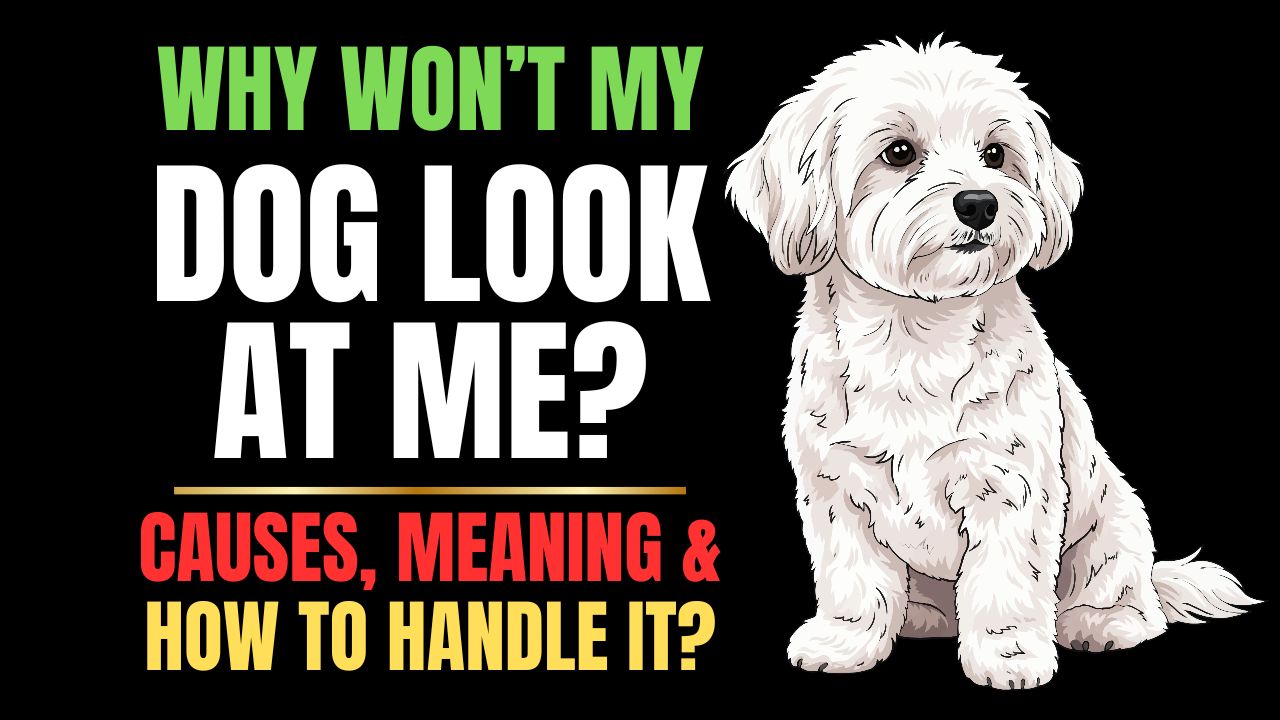
Why Won’t My Dog Look at Me? Eye Contact Explained
When your dog consistently avoids making eye contact, it can be confusing and concerning. This subtle behavior communicates important information about your dog's emotional state, comfort level, and even physical wellbeing. Understanding why dogs avoid eye contact is crucial for building a strong, trusting relationship with your canine companion.
Eye contact in the canine world carries different meanings than in human interactions. While humans often view direct eye contact as a sign of engagement and trust, dogs may interpret sustained eye contact as challenging or threatening. This fundamental difference in communication styles explains why many dogs naturally avoid prolonged eye contact.
This comprehensive guide explores the complex reasons behind eye contact avoidance in dogs. You'll learn to interpret this behavior in context, understand when it's normal and when it signals problems, and discover practical strategies to help your dog feel more comfortable with appropriate eye contact.
Understanding Canine Eye Contact
Eye contact represents a complex form of communication in the canine world that serves multiple functions. Dogs use eye contact to gather information, communicate intentions, and establish social relationships. Understanding how dogs naturally use and interpret eye contact is the foundation for interpreting avoidance behavior.
The Evolution of Canine Eye Communication
Research into canine behavior reveals that domestic dogs have evolved specialized eye communication skills that differ from their wolf ancestors. Studies show that dogs have developed more expressive eyebrows and eye movements that facilitate communication with humans. The "puppy dog eyes" expression, created by raising the inner eyebrows, is a specifically domesticated trait that triggers nurturing responses in humans. Interestingly, research has demonstrated that dogs are more likely to make eye contact with humans than wolves are, suggesting this behavior has been selected for during domestication. However, the rules for eye contact between dogs remain different from human-dog interactions. Understanding this evolutionary background helps explain why eye contact avoidance can mean different things in different contexts and why some dogs are more comfortable with eye contact than others.
Eye Contact as Communication
Dogs use eye contact and avoidance to convey specific messages about their emotional state, intentions, and social standing. The duration, intensity, and context of eye contact all contribute to its meaning.
| Eye Behavior | Common Context | Likely Meaning |
|---|---|---|
| Brief Glances | During normal interaction, checking in | Normal communication, information gathering |
| Sustained Avoidance | After correction, during stress, with unfamiliar people | Appeasement, anxiety, discomfort |
| Hard Stare | Before aggression, during high arousal | Challenge, threat, intense focus |
| Soft Gaze | During relaxed moments, with trusted humans | Affection, trust, connection |
Common Causes of Eye Contact Avoidance
Dogs avoid eye contact for various reasons that span behavioral, emotional, and medical categories. Understanding these different motivations helps you respond appropriately to your dog's needs.
Behavioral Causes
Appeasement & Submission
Dogs often avoid eye contact to signal non-threatening intentions and deference. This appeasement behavior helps prevent conflict and maintain social harmony.
Normal social behavior
Emotional Causes
Anxiety & Fear
Dogs may avoid eye contact when feeling anxious, fearful, or stressed. This can indicate discomfort with the situation, person, or environment.
Emotional distress
Medical Causes
Vision Problems & Pain
Eye contact avoidance can signal vision impairment, eye discomfort, or general pain. Dogs may avoid eye contact when focusing is difficult or painful.
Health concern
Eye Contact Avoidance Causes by Frequency
The Vision-Contact Connection
Veterinary ophthalmologists emphasize that changes in eye contact behavior can be early indicators of vision problems. Dogs with developing cataracts, progressive retinal atrophy, or other vision impairments may avoid eye contact because maintaining focus becomes difficult or uncomfortable. Additionally, eye conditions like conjunctivitis, corneal ulcers, or dry eye can make direct eye contact physically painful. Dogs in general pain may also avoid eye contact as part of a broader pattern of social withdrawal. If eye contact avoidance is new, persistent, or accompanied by other signs like bumping into objects, reluctance to go out in dim light, or physical signs around the eyes (redness, discharge, squinting), a veterinary examination is crucial. Early detection of vision problems allows for more effective management and can prevent worsening of conditions.
Context Matters: Interpreting Avoidance
The meaning behind your dog's eye contact avoidance depends heavily on the context in which it occurs. The same behavior can communicate different messages depending on the situation, your relationship with your dog, and their overall behavior patterns.
Situational Interpretation
Understanding what was happening before and during your dog's eye contact avoidance provides crucial clues to its meaning. Different contexts trigger avoidance with distinct emotional underpinnings.
| Situation | Likely Meaning | Appropriate Response |
|---|---|---|
| After correction | Appeasement, submission, understanding | Accept the signal, return to normal interaction |
| With unfamiliar people | Caution, uncertainty, potential fear | Allow choice to interact, don't force attention |
| During veterinary exams | Stress, discomfort, anxiety | Use calming techniques, positive reinforcement |
| Without obvious triggers | Possible medical issue, generalized anxiety | Veterinary consultation, behavior assessment |
Reading the Full Behavioral Picture
Eye contact avoidance rarely occurs in isolation. To accurately interpret your dog's behavior, you need to consider the complete behavioral picture. A dog who avoids eye contact while offering a play bow and wagging tail is likely engaging in normal social negotiation. A dog who avoids eye contact while crouching with tail tucked and ears back is probably fearful. A previously confident dog who suddenly starts avoiding eye contact in multiple contexts might be experiencing vision changes or pain. Important factors to consider include: overall body posture, tail position and movement, ear placement, vocalizations, and proximity to you or others. By observing the entire constellation of behaviors rather than focusing solely on eye contact, you can much more accurately determine your dog's emotional and physical state. Documenting when avoidance occurs and what accompanies it can reveal patterns that help with accurate interpretation.
Context Assessment Checklist
- What immediately preceded the eye contact avoidance?
- How does your dog's overall body language appear?
- Is the avoidance consistent or situation-specific?
- Does your dog avoid eye contact with everyone or specific people?
- What is the environment like when avoidance occurs?
- Are there other behavioral changes accompanying the avoidance?
- Is this a new behavior or established pattern?
- How does your dog respond to gentle encouragement?
Canine Cultural Differences
Understanding how dogs naturally use and interpret eye contact requires appreciating the differences between canine and human communication styles. These cultural differences explain why behaviors that seem natural to humans may be misinterpreted by dogs.
The Canine Perspective
In canine social structure, eye contact carries specific meanings that differ significantly from human interpretations. Understanding these differences prevents miscommunication and strengthens your bond.
Brief Glances
Canine Meaning: Normal information gathering
Human Equivalent: Casual looking around
Social Function: Checking in, monitoring environment
Response: Normal, no action needed
Avoidance
Canine Meaning: Deference, appeasement
Human Equivalent: Looking away respectfully
Social Function: Preventing conflict, showing respect
Response: Accept the signal, don't force contact
Hard Stare
Canine Meaning: Challenge, threat, intensity
Human Equivalent: Confrontational staring
Social Function: Establishing dominance, warning
Response: Break contact, de-escalate situation
The Human-Dog Communication Gap
One of the most common problems in human-dog relationships stems from misinterpretation of eye contact. Humans naturally use prolonged eye contact to show affection, attention, and connection. However, in canine language, sustained direct eye contact can be perceived as challenging or threatening. This communication gap explains why some dogs become uncomfortable when owners try to maintain eye contact. Additionally, humans often unintentionally reinforce avoidance behavior by pursuing eye contact when dogs signal discomfort. The key to bridging this gap is learning to recognize and respect canine communication signals. Instead of insisting on eye contact, allow your dog to offer it voluntarily. Use soft, indirect gaze rather than intense staring. Pay attention to your dog's comfort level and respond appropriately to their signals. This respectful approach builds trust rather than anxiety.
Breed-Specific Tendencies
Some dog breeds have genetic predispositions regarding eye contact due to their historical working roles and selective breeding.
| Breed Type | Eye Contact Tendency | Historical Reason |
|---|---|---|
| Herding Breeds | High - use eye contact to control livestock | Bred for intense focus and visual communication |
| Companion Breeds | Variable - often comfortable with eye contact | Selected for close human interaction |
| Independent Breeds | Lower - may prefer less direct contact | Bred for independent work with less human direction |
| Guardian Breeds | Selective - may watch intently but avoid direct gaze | Bred for vigilant observation without confrontation |
Body Language Clues
Eye contact avoidance is just one piece of the complex puzzle of canine communication. To accurately interpret this behavior, you need to consider the accompanying body language signals that provide context and clarification.
Facial Expressions
Beyond the Eyes
Observe your dog's overall facial expression. Relaxed facial muscles with soft eyes indicate normal avoidance, while tense muscles with whale eye (whites showing) suggests anxiety or fear.
Face reveals emotional context
Body Posture
The Full Picture
Note whether your dog's body is relaxed and loose or tense and stiff. A dog avoiding eye contact with a relaxed, wiggly body is likely engaging in normal social behavior rather than expressing distress.
Posture confirms emotional state
Other Signals
Cluster Recognition
Look for accompanying behaviors like lip licking, yawning, shaking off, or specific focus. These often occur together with eye contact avoidance as part of a cluster that reveals the underlying emotion.
Multiple signals increase accuracy
Body Language Assessment
| Body Part | Relaxed/Content Signs | Anxious/Stressed Signs |
|---|---|---|
| Eyes | Soft, normal blinking, occasional glances | Whale eye, rapid blinking, complete avoidance |
| Ears | Natural position, relaxed movement | Pinned back, tense, rapidly moving |
| Mouth | Relaxed, slightly open, normal panting | Closed tight, tension, lip licking, yawning |
| Body | Loose, wiggly, normal movement | Stiff, tense, lowered, trembling |
The Concept of Calming Signals
Canine communication expert Turid Rugaas identified specific "calming signals" that dogs use to prevent conflict and reduce stress. Eye contact avoidance is one of these important signals. Other common calming signals include lip licking, yawning, turning away, sniffing the ground, and shaking off. When dogs use these signals, they're attempting to calm themselves or communicate peaceful intentions to others. Understanding these signals helps you recognize when your dog is feeling uncomfortable or trying to de-escalate a situation. Rather than insisting on eye contact when your dog offers calming signals, respect their communication and adjust your behavior accordingly. This might mean giving them more space, reducing intensity, or changing your approach. Recognizing and responding appropriately to calming signals builds trust and prevents misunderstandings that can damage your relationship.
Solutions & Training Strategies
Addressing eye contact avoidance requires a thoughtful approach that respects your dog's communication style while building comfort and trust. The most effective strategies focus on creating positive associations and allowing voluntary engagement.
Training Approaches
Different types of eye contact avoidance require different training strategies. The key is to build positive associations rather than forcing interaction.
| Situation | Training Strategy | Implementation |
|---|---|---|
| Fear-Based Avoidance | Counter-conditioning, desensitization | Pair eye contact with high-value rewards at comfortable distance |
| Normal Canine Behavior | Respect natural communication | Accept avoidance as normal, don't insist on contact |
| Attention-Seeking | Capture offered attention | Reward voluntary eye contact, teach "watch me" cue |
| Medical Issues | Veterinary consultation first | Address underlying health issues before behavior modification |
The "Watch Me" Command Training
Teaching a "watch me" or "look at me" cue can be valuable for building comfort with appropriate eye contact. Start in a low-distraction environment with high-value treats. Hold a treat near your eyes and say "watch me." The moment your dog makes eye contact (even briefly), mark the behavior with a clicker or verbal marker like "yes!" and give the treat. Gradually increase the duration of eye contact required before marking and rewarding. Keep sessions short and positive, ending before your dog becomes frustrated or stressed. Never force eye contact or punish avoidance. The goal is to create positive associations, not to demand compliance. This training is particularly useful for building focus in distracting environments and can help fearful dogs learn that looking at you predicts good things. Remember that brief glances are more natural for dogs than prolonged staring.
Environmental Management
Modifying your approach and environment can significantly improve your dog's comfort with eye contact by reducing pressure and creating positive experiences.
- Use soft, indirect gaze rather than intense staring
- Blink slowly and frequently to signal non-threatening intentions
- Turn your head slightly to the side rather than facing directly forward
- Allow your dog to approach you rather than pursuing them
- Respect avoidance signals and give space when needed
- Create positive associations by pairing your presence with good things
- Avoid leaning over your dog or standing directly facing them
The Power of Choice
One of the most effective ways to build trust and comfort with eye contact is to give your dog choice and control in interactions. Instead of insisting on eye contact, create opportunities for your dog to offer it voluntarily. This might mean sitting quietly with treats and waiting for your dog to look at you, rather than calling their name or demanding attention. When your dog chooses to make eye contact, respond positively with soft praise, gentle petting (if they enjoy it), or treats. This approach respects your dog's autonomy and communication style while building positive associations. Dogs who feel they have choice in interactions are typically more confident and willing to engage. This is particularly important for fearful or previously traumatized dogs who need to rebuild trust in human interactions. Remember that forced interactions often increase anxiety, while voluntary engagement builds confidence.
Frequently Asked Questions
Yes, it can be completely normal for some dogs to rarely make direct eye contact. This depends on your dog's individual personality, breed tendencies, past experiences, and your relationship. Some dogs are naturally more reserved and prefer indirect communication. Many dogs use brief glances rather than sustained eye contact as their primary way of checking in with owners. What's important is the quality of your overall relationship rather than the frequency of eye contact. If your dog is otherwise happy, engaged, and responsive to you, occasional eye contact may be perfectly normal for them. However, if eye contact avoidance is new, accompanied by other behavior changes, or seems related to anxiety or fear, it may warrant further investigation. The key is understanding what's normal for your individual dog and watching for changes in their established patterns.
No, you should never force your dog to make eye contact. Forcing eye contact can increase anxiety, damage trust, and potentially lead to defensive behaviors. In canine communication, forced eye contact is often interpreted as challenging or threatening. Instead of forcing interaction, focus on creating positive associations that encourage your dog to offer eye contact voluntarily. Use high-value treats, gentle encouragement, and respect your dog's comfort level. Teach a "watch me" cue through positive reinforcement rather than demanding compliance. Remember that brief, voluntary glances are more valuable in building trust than prolonged, forced staring. If your dog consistently avoids eye contact despite your efforts to create positive associations, respect their communication style and find other ways to strengthen your bond, such as through training, play, or quiet companionship.
There are several possible reasons why a dog might make eye contact with others but avoid it with their primary caregiver. Some dogs are more comfortable making eye contact with strangers because there's less emotional intensity in those interactions. With their primary person, there may be history, expectations, or emotional complexity that makes eye contact feel more significant. Some dogs who have been corrected by their owners may avoid eye contact as an appeasement gesture. Other dogs may have learned that avoiding eye contact with their owner leads to being left alone (negative reinforcement). It could also be related to how different people approach eye contact - some people use soft, indirect gaze that's less intimidating. If this pattern concerns you, focus on building positive associations with eye contact through training games and ensuring your interactions are consistently positive and predictable.
A sudden change in eye contact behavior warrants attention. Possible reasons include: a negative experience that created association between eye contact and something unpleasant; development of a vision problem making eye contact difficult or uncomfortable; onset of pain or illness causing general social withdrawal; increased anxiety or stress affecting social behavior; or changes in household dynamics affecting your relationship. If the change is sudden and significant, start with a veterinary examination to rule out medical issues, particularly vision problems or pain. If medical causes are ruled out, consider what might have changed in your dog's environment, routine, or your interactions. Have there been changes in household members, schedule, or your behavior? Have there been frightening experiences? Sometimes the cause isn't obvious, but addressing underlying anxiety and rebuilding positive associations can help restore comfort with eye contact.
No, avoiding eye contact is not a sign of guilt in dogs. The "guilty look" that many owners interpret as evidence of wrongdoing is actually appeasement behavior in response to owner cues. Research has demonstrated that dogs display these behaviors (avoiding eye contact, crouching, showing whites of eyes) in response to owner body language and tone of voice, regardless of whether they actually did anything wrong. Dogs don't experience complex emotions like guilt in the same way humans do. When a dog avoids eye contact after mischief, they're responding to your emotional state and anticipating potential correction, not expressing remorse for their actions. Understanding this distinction is important because punishing "guilty" behavior can actually increase anxiety and damage your relationship. Instead of focusing on eye contact as evidence of wrongdoing, manage your dog's environment to prevent unwanted behaviors and use positive reinforcement to teach appropriate alternatives.
You should seek professional help if: eye contact avoidance is sudden and persistent; avoidance is accompanied by other signs of anxiety or fear that impact quality of life; your dog shows signs of vision impairment; avoidance is part of a broader pattern of social withdrawal or behavior changes; or your attempts to build positive associations have been unsuccessful. Start with your veterinarian to rule out medical causes, particularly vision problems, pain, or neurological issues. If medical causes are ruled out, consult with a certified professional dog trainer or veterinary behaviorist who uses positive reinforcement methods. Professional guidance is particularly important for fear-based avoidance, as inappropriate approaches can worsen the problem. A professional can help you develop a customized behavior modification plan that addresses the underlying causes while respecting your dog's communication style and building trust through positive experiences.
Eye contact avoidance during training can indicate stress, confusion, or pressure. To address this, first ensure your training methods are positive and force-free. Break behaviors into smaller steps to reduce frustration. Use higher-value rewards and keep sessions short and enjoyable. Instead of insisting on eye contact, focus on building engagement through movement, play, and enthusiasm. Teach a "watch me" cue separately from other training, using high-value treats and keeping criteria very low initially. Pay attention to your own body language - avoid leaning over your dog, staring intensely, or showing frustration. If your dog avoids eye contact when you have treats, you may be creating unintentional pressure. Try placing treats on the ground or using a food-dispensing toy to reduce intensity. Remember that some dogs naturally focus better when not making direct eye contact. The goal is willing participation, not forced attention.
Free Printable "Dog Eye Contact Guide"
This quick-reference guide helps you interpret your dog's eye contact behavior and respond appropriately. Print and keep it accessible for easy reference.
How to Use This Guide
This eye contact guide provides a quick reference for interpreting different dog eye behaviors based on context and accompanying body language. Keep it in a convenient location to help you better understand your dog's communication and respond appropriately to their needs.
Dog Eye Behavior Interpretation Chart
| Eye Behavior | Common Context | Likely Meaning |
|---|---|---|
| Brief Glances | Normal interaction, checking in | Normal communication, information gathering |
| Sustained Avoidance | After correction, with unfamiliar people | Appeasement, anxiety, discomfort |
| Soft Gaze | Relaxed moments, with trusted humans | Affection, trust, connection |
| Hard Stare | Before aggression, high arousal situations | Challenge, threat, intense focus |
Eye Contact Response Guide
- For brief glances: Normal behavior, no action needed
- For sustained avoidance: Respect the signal, assess context
- For soft gaze: Reciprocate gently, strengthen bond
- For hard stare: Break contact, de-escalate situation
- For all eye behaviors: Consider full body language context
- For persistent concerns: Seek professional guidance if needed
Conclusion: Understanding Your Dog's Eye Contact
Eye contact avoidance in dogs is a complex behavior with multiple potential meanings. While sometimes reflecting normal canine communication patterns, it can also indicate emotional distress, physical discomfort, or relationship issues that need attention. Understanding the context, frequency, and accompanying body language is essential for accurate interpretation.
Dogs use eye contact and avoidance as important forms of communication within their social structure. What humans might interpret as inattention or disinterest often represents normal canine social behavior or attempts to prevent conflict. Recognizing these cultural differences in communication styles prevents misunderstandings and strengthens your bond.
By learning to interpret your dog's eye behavior in context with their overall body language, you can better understand their emotional state and respond appropriately to their needs. This understanding creates a more harmonious relationship based on mutual respect and clear communication.
Always approach eye contact with respect for your dog's comfort level and communication style. Instead of forcing interaction, focus on creating positive associations that encourage voluntary engagement. Remember that brief, soft glances are more valuable for building trust than prolonged, intense staring.
If eye contact avoidance is sudden, persistent, or accompanied by other behavioral changes, consult with your veterinarian to rule out medical issues. With patience, understanding, and appropriate intervention when needed, you can help your dog feel more comfortable with appropriate eye contact while respecting their natural communication style.
In the Spotlight




About the Author

Andrea Arden
Author
Andrea Arden is a leading dog behavior expert, author, and media personality featured on Animal Planet, the Today Show, and more. She has written acclaimed dog training books and served on boards for major animal welfare organizations.